NCDC Press Room with the DG, Faculty and Fellows of Media EIS.
By Smith Nwokocha
Media EIS Fellowship Cohort 1, Track 3 (Infodemic Management) started with a Tour of the NCDC facility, going through the different departments at the NCDC Headquarters in Abuja. The Media Fellows were grouped with a faculty as a Group Lead. They had a visit to the NCDC Incident Coordination Centre (ICT), Event-Based Surveillance (EBS) Unit, which oversees daily reporting on the Epidemic Survey, and they receive calls from the public in 24-hour mode, with a surveillance dashboard that makes public awareness of outbreaks with a local tracker called TATAFO. NCDC believes there is no bad news or good news, all news is valid. Visiting the ICT Centre of NCDC, there is the ICC Mode of Operation, which has; Watch Mode, Alert Mode and Response Mode, there is also an ICT Meeting Schedule, Emergency and Disaster Risk Calendar, SITAWare, and Epidemic Intelligence from Open Source.
There was a warm reception by the DG (Dr Jide Idris), who was welcomed at the Press Room by the Media EIS Fellows, the Faculty, and partners. The meeting was moderated by Dr. Abiodun Ogunniyi of Nigeria CDC. He did a brief of the team members, congratulating the 29 Fellows who made it through Media EIS Fellowship Cohort 1. He welcomed the Resident Advisor of Media EIS Fellowship, in the person of Dr. Olayinka Umar-Farouk. In her remarks, she thanked the NCDC and other partners for their support and emphasised the Programme tends to build first-of-its-kind Health Media Reporters/Practitioners not just in Nigeria, but across the World. These First-Class Media Practitioners are armed with the skills needed to enhance the quality of public health communication and they have undergone rigorous training, mentorship and coaching with key components to enable them to build Community resilience through the Media, solving health-related issues already in their communities.
The Media is bridging the gap between science and information dissemination…. A. Ogunniyi added.
THE DG’S SPEECH:
Dr. Jide Idris MBBS, MD, MPH (Director General, of Nigeria Centre for Disease Control and Prevention). The DG thanked the faculty members and Fellows for the visit, he came in as DG four months ago and he is here to restructure NCDC with a major focus on Health Security, there are Pillars of Health to attain Health Security, which include (a) Prevention, (b) Early Warning, (c) Detection and (d) Awareness and Response. We know that from January to December, there are certain occurrences of diseases, so the question is, if we know all these, why do more people die? So, we will be looking out more on Prevention. Also, some of these diseases and outbreaks are tied to our environment, climate change, economics and so on, we will come out with solutions and preventable measures to address these public health diseases/outbreaks. We will still go into surveillance, identify the gaps, and work more efficiently with technology for better results. AMR for instance, looking at the literature, is rising globally, yet nobody seems to understand what is going on. We all have a lot of work to do, in his words. The DG demanded the lists of the Fellows of Media EIS Fellowship programme. He recalled, that in 2014, after Nigeria was declared Ebola-free, a journalist struck him on issues, he was then a commissioner, he said, such are the examples of Journalists that should be encouraged.
Way Forward: Prevention, Social/Determination of Health across the Country and step it down to the States. Using different local languages to engage the public. The DG said he fully supports the Fellowship Programme and will sustain it in his tenure. In the context of restructuring, human resource development will be looked at and there are a lot of training programmes going on, though quite interesting, but these training programmes need to be integrated and consolidated. He gave his assurance, that NCDC will be working together with Media EIS Fellows to tackle prevailing health issues in Nigeria. AMR, Climate Change, and the rest are prevailing public health challenges and NCDC can’t do it alone, even the medical practitioners can’t do it themselves, the Communication people cannot as well, we need each other, and we will work together. He welcomed the idea and will continue the Programme. In conclusion, the DG said, it’s about time, we change the social behaviour of our people. “Health is everybody and everybody has a role to play. Health security is a long partnership”. Thank you!
The Program Manager (Mr. Edosa Oviawe), Global Rights addressing Journalists
By Smith Nwokocha
Journalists across Nigeria were trained for two days in Abuja (May 9th– 10th 2024). Ajeole Enemarie (Programme Officer, Security and Human Rights, Global Rights) welcomed all the participants and introduced Mr Edosa Oviawe (Programme Manager, Global Rights), who facilitated the first session, he started by welcoming the Journalists and thanked them on behalf of the Executive Director of Global Rights (Ms. Abiodun Baiyewu): he emphasized the discussion will be on Solid Minerals. Mr Edosa delved deeply into MINING: THE NIGERIA STORY, and contextually he said, “Nigeria is richly endowed with a variety of Solid Minerals ranging from precious metals, gemstones, and industrial minerals to energy minerals like coals and bitumen etc. These solid minerals are scattered all over the country. The mining sector in Nigeria has historically played a significant role in the country’s economy, yet this same sector has suffered decades of challenges. However, looking at the growth level, organized commercial mining in Nigeria has spanned over twelve (12) decades. The Igbo Bronze Archeological remains indicate that community mining has been ongoing in Nigeria since the 9th century AD. The discovery of Coal in Enugu in 1909 and later the rail. The decline-Two major factors contribute to it: the discovery of Oil (Oloibiri January 15th, 1956) and the Civil War. Attempts at reviving the sector; the Oil boom of the 1970s and the Government’s drive to indigenized running Companies adversely, affected efforts to resuscitate the mining Industry. The Revival: Economic downturn of the 1980’s. Action Steps to Reviving the Solid Minerals Sector. Return to Democracy 1999. The Government has sought to expand and strengthen the industry and ensure its continued growth through the launch of several initiatives. In summary, Mining in Nigeria has the potential to significantly contribute to the country’s economic development. The extractive industry in Nigeria has historically been dominated by the Oil and Gas sector, leaving other mineral resources largely unemployed.
Challenges Facing Mining in Nigeria. A) Regulating and legal challenges. B) Inconsistent Policies. C) Overlapping responsibilities between Federal and State Government. D) Unclear and tenured systems.
EIA- Environmental Impact Assessment. Who signed the Host Community’s Consent form:
Conclusion: With the right policies investments and responsible practices, Nigeria can harness its mineral wealth for sustainable development and prosperity.
UNDERSTANDING THE NIGERIA MINERALS AND MINING ACT 2007, facilitated by Emily Offodile (Founding Executive Director, Ziva Community Initiative).
She gave a brief history of the Act to Journalists with an in-depth understanding of the Nigeria Minerals and Mining Act 2007 and considered its implications for the Host Communities. The Nigerian Minerals and Mining Act 2007 (“the Act”) was passed into Law on March 16th, 2007, to repeal the Minerals and Mining Act, No 34 of 1999 to regulate the exploration and exploitation of solid materials in Nigeria.
Minerals Prospecting Mining and Quarrying: Ownership and Control of Minerals; The Act vests control of all properties and minerals in Nigeria in the state and prohibits unauthorized exploration or exploitation of minerals. All lands in which minerals have been found in commercial quantities shall from the commencement of the ACT be acquired by the Federal Government following the Land Use Act. Property in mineral resources shall pass from the Government to the person by whom the mineral resources are lawfully won, upon their recovery following provisions of the Act. This provision balances Mineral development and existing land rights, ensuring sustainable mining. Status of the holders of mineral titles granted under the repealed Act. Government Intervention: This intervention could relate to regulatory frameworks, environmental protection, and community engagement.
Mining Cadastre Office (MCO): The Act establishes the Mining Cadastre Office (MCO). The MCO has a critical role in the Administration of Mineral titles. It maintains the Cadastre registers, and essential records of mining rights, lease, and licenses. Mines Inspectorate Department (MID): The MID is responsible for overseeing mining operations safety and compliances with regulations. They inspect mining.
Mines Environmental Compliance Department (MECD): The MECD focuses on environmental matters related to mining activities.
Implications To the Mining Host Community:
Community Development Agreement (CDA): The Act enacts a regime of mandatory CDA negotiation. Protection of Interest, Community participation, Infrastructure and Social Service. Environmental protection, Fair Compensation. In summary, the Nigerian Minerals and Mining Act recognizes the critical role of host communities and seeks to create a balanced framework where mining benefits are shared equitably. CDAs play a pivotal role in achieving this goal.
PROTECTING HOST COMMUNITY RIGHTS: KNOWING THE REGULATORS, TYPES OF MINERAL TITLES AND WHAT MINING COMPANIES DO: Facilitated by Tsema Ede (Natural Resource Governance Expert).
How will the EIAs and CDAs be remedied as they affect the communities?
Mineral Resources and Environmental Management Committee (MIREMCO):
Functions of State MIREMCO:
MIREMCOS: Composition. What will be the cost of not having an active state MIREMCO? The primary consequence has been the governance failure occasioned by the Federal and State Governments. How should a state MIREMCO function? It is in the interest of the state government to ensure that the MIREMCO reiterates its policies in its advice to the Hon.Minister.
MIREMCO: Mining companies as a part of the development contingencies, be required to invest in social infrastructure especially those that EIAs have indicated that their activities will directly or indirectly impact the environment or the status quo of their host communities. The state MIREMCO may keep a catalogue of abandoned mines and mining for remediation.
How MIREMCO can optimize their efficiency: The provision of the Act and their implementation. The ECOWAS Mining Directive and the Africa Mining Vision.
NEITI, Federal Ministry of Environment and Environment Assessment Department.
NEITI: a body entrusted by law with the mandate of promoting transparency and accountability in the management of revenues from Nigeria’s Oil, Gas and Mining Sectors.
Objectives of NEITI:
The NEITI Act; accordingly, ensures due process and transparency concerning payments made by the Extractive industry.
NEITI’s challenge is reports that has largely concentrated its efforts on tracking the financial flow within the hydrocarbon to the determinant of the solid minerals sector.
Revenue Mobilization and Fiscal Allocation Commission (RMFAC): The responsibility of monitoring the accruals to and disbursement of revenue from the Federation Account; periodically reviewing the revenue allocation formulae and principles in operation to ensure conformity with changing realities; advising the Federal and State Governments on fiscal efficiency and methods by which their revenue can be increased.
RMFAC recently started to allot solid minerals.
NESREA: Empowered to make regulations setting specifically for the protection of the Environment.
Environmental Restoration: Section 114 of the Act requires that areas where mining operations are being carried out on or after the passage of the Act into law in 2004 must be restored after the operations by the grantee of the mining lease.
MAKING A CASE FOR ETHICAL MINING: HOLDING GOVERNMENT AND MINING COMPANIES ACCOUNTABLE FOR HOST COMMUNITIES’ RIGHTS. Facilitated by Edosa Oviawe.
(S 4413) Constitution of Nigeria: “The entire property in and control of all minerals, mineral oils and natural gas in under or upon any land in Nigeria or in, under or upon the territorial waters and the Exclusive Economic Zone of Nigeria shall vest in the Government of the Federation and shall be managed in such manner as may be prescribed by the National Assembly”.
The significance of Mining to the Nigerian Economy: Economic contribution, Job creation, Forex Earnings, Industrial Development-Audience Intervention, Rural Development-Audience Intervention.
Promoting Ethical Mining: What is Ethical Mining? Responsible Mining + Sustainable Mining = Ethical Mining. Ethical mining is Mining practices that prioritize environmental protection, social responsibility, and economic viability. Ethical mining aims to minimize the negative impacts of mining activities on the environment, local communities, and workers while maximizing the benefits for all stakeholders involved. Key Principles of Ethical Mining:
Environmental Sustainability: it seeks to minimize environmental degradation and promote ecosystem conservation. It minimizes the footprint of the miners’ operations and ensures the responsible use of natural resources.
Social Responsibility: Respect for the rights, interests, and well-being of the Mining Host Communities and other local communities affected by mining operations. Engage with Host Communities in a transparent and participatory manner. Respect local cultural heritage and traditional land rights- Pollution of UNESCO World Heritage Site. Address Host Communities’ concerns regarding environmental impacts, livelihoods, and social development.
Health and Safety: Prioritize the health and safety of workers and communities. Ensure compliance with occupational health and safety standards. Provide a safe working environment free from hazards and risks. Fair labour.
Ethical Mining: Represents a holistic approach to current challenges in Nigeria’s Mining Sector.
The following day, Edosa Oviawe touched on UNDERSTANDING THE IMPACT OF MINING: and recommended watching “The Water Crisis” on the Global Rights YouTube channel. He asked, does our Energy Plan think of Nigeria in the next 5o years? And another question from Ms. Abiodun Baiyewu from the video: she asked, “Does our Energy Plan take into cognizance the Electrification supply for common people? How do we do Mining in the face of Climate Change? We should do Mining in a way that promotes sustainability for Development and Mining in a manner, that does not impact the environment negatively.
MINING AND INSECURITY IN NIGERIA: Facilitated by Tsema Ede.
History of Mining and Insecurity in Nigeria: The history is complex and multifaceted, involving various factors such as illegal mining, local conflicts, political connections, and governance issues. Pre-Independence Era, after-Independence etc.
In conversing with the journalists, Tsema Ede said: “Kindness is Critical”.
The Relationship between Insecurity and Mining: How illegal mining is driving local conflicts in Nigeria. Live stories of people affected by the impact of mining alongside climate change and how companies are polluting the environment. Criminal networks fuel community violence in a bid to exploit untapped minerals.
Artisanal and Small-Scale Mining (ASM): Characteristics; Low level of Technology and a lack or limited use of mechanism. Low productivity and recovery values. Lack of safety measures and health care. Lack of environmental protection. Often informal.
Understanding the Problem: Section 1 (1) of the Nigerian Minerals and Mining Act, 2007 gives the Federal Government ownership and absolute control over minerals.
Illegal Mining and Local Conflicts: Illegal mining is a significant issue in Nigeria, particularly in the North-West of Nigeria. An estimated 80% of Artisanal mining is carried out illegally by the local population. While ASGM has the potential to be a catalyst for development, its role as a critical livelihood strategy, pervasive informality and gold’s inherent attractiveness to illicit actors result in an environment.
Simplified Representation of African Gold Supply Chain. While ASMers are the most visible manifestation of ASGM, it is the clandestine criminal consortia who hold the strings to the sector. It is a challenge to differentiate between informality and criminality. Activity ranges from small-time gold buyers engaging in relatively begin illegal.
Insecurity Factors in Nigeria’s ASGM Industry: Collaboration between politically connected Nigerians and Chinese Corporations in illegal gold mining drives rural banditry and violent local conflicts in some parts of Nigeria. The mining of large untapped mineral deposits in the area, especially gold which has strategic importance and economic value, is at the root of community violence. Illegal mining leads to violent local conflicts in two ways in the North-West. First, those funding the mining fight over control of the minefields. These sponsors are protected by some State Government and act as if they are above the law. Illegal miners often front for politically connected individuals who collaborate with foreign nationals and corporations to sell gold. The mineral is routinely smuggled to Dubai through neighbouring Niger and Togo.
Bad Leadership and Weak Institutions in Nigeria. The growth of Nigeria’s mining sector, which boasts 44 different types of commercially viable minerals worth an estimated $700bn, has stalled, among other things, insecurity.
Trends: The exchange of illegally mined gold for weapons, the use of women and girls. In the last decade, more than 8,000 people have been killed in the states of Kebbi, Sokoto, Niger, and Zamfara due to local conflict and banditry. These regions have witnessed violence stemming from long-standing resource competition between ethnic Fulani Helders and Farming Communities. The scarcity of water and deforestation exacerbate the challenge and of course Climate Change.
The Role of Women and Girls: First, girls are used in the mining fields as labourers by illegal miners. This exposes them to severe poisoning of lead dust, which results in health problems, and it also puts women in mining camps and communities at risk as attendant vulnerable. Direct Participation, Support Roles, Exploitation and Vulnerability, Environmental Stewardship.
Challenges: Gender inequalities persist in mining. Women face barriers in accessing education, and conflicts in Host Communities.
Tackling Insecurity: Insecurity in the mining sector; could be curbed using Technology, Collaboration with Security Agencies and Mining Host Communities.To address the dangers of women, girls and minors in gold and arms smuggling, the Government needs to collaborate with local communities and invest in infrastructure.
In Conclusion: The nexus of insecurity and mining in Nigeria is a complex issue that involves illegal mining local conflicts, political connections, and governance issues. Addressing these challenges is crucial for the development and growth of the mining industry in Nigeria. Formalization of sector participants; the Federal Government, through effective collaboration with Host Communities, should use Technology and Licensing Databases to improve tracking, monitoring, and formalization of Miners, particularly Artisanal Miners, who operate and generate revenues without paying taxes or royalties. This will also aid targeted support by the Government on training, access to equipment and funding, and implementing safe mining practices.
Tsema Ede closed with a quote: “If there are consequences for bad behaviour, bad behaviour will stop” and “An Institution is as strong as its Leader”.
MANAGING NIGERIA’S CRITICAL MINERALS: AVOIDING THE GREEN RESOURCE CURSE! Facilitated by Ahmad Abdulsamad (Program Officer-Natural Resource Governance Institute).
Global-rooted Organization in the critical mineral space and to see how the solid mineral will benefit the people instead of undermining their plights. How do we see a Just Energy Transition? A Just Energy Transition is an Energy Transition characterized by equity and justice in terms of both the process and the outcomes. This means that the Transition is well-governed, supports people’s right to say in the decision-making process and prioritizes Policy outcomes that minimize inequality, injustice, and exclusion domestically and internationally.
NRGI- is working to shape a future beyond oil for Nigeria, which shall entail the gradual and responsible phase-out of fossil fuels.
Emerging Issues in Nigeria’s Solid Mineral Sector? The Nigerian Energy Transition Plan (ETP) should be clearer about the role of critical minerals. 324 more exploration licenses were issued in 2021 (62.79% increase from 2020), showing continued interest in mineral exploration. ASM Operators increased by 85% from 1,273 in 2020 to 2,336 in 2021 across six zones but lack supporting data for production.
What are Critical or Transition Minerals? Critical minerals are those that are needed for Renewable Energy and Electrification Infrastructure, Wind turbines, Solar PVS, and EVS.
What is the Resource Curse? The term Resource Curse encompasses the significant social, economic, and political challenges that are unique to Countries Rich in Oil, Gas and Minerals. Many Oil, Gas and Mineral-rich countries have failed. What is the Resource Curse? (Oil Sector for example) Critical Minerals and Corruption? Why are critical minerals high risk? Commodity boom dynamics. New players and new roles. Poor Governance Jurisdiction.
What Corruption Risks Might Emerge in the Critical Mineral Space? What do we mean by corruption? Corruption, abuse of entrusting power for double gain. Licensing: bribery to influence awards, favouritism in licensing procurement, collusion, or manipulation by companies to influence awards processes, manipulation of the environment and social assessment processes, manipulation of community consultation, undue private influence over laws. Revenue Collection: undue influence on revenue collection, laws and regulations, Corruption, or favouritism to influence revenue collection. Social and Environmental Impacts: undermining the integrity of EIAs, Community consultation and land access negotiation, undue private influence over laws, regulations and oversights institutions, concealment of environmental damage and avoidance of liability for rehabilitation, corruption in contracting, sub-contracting, or hiring allows unsafe/unfair working conditions, Extortion of facilitator, Erosion of civic space. Are these issues like those we have experienced in Nigeria? and the answer is yes!
How to Prevent Corruption in Mineral Sectors? Adopt and protect local communities and Hold Corrupt Actors accountable.
REFLECTION ON MINING HOST COMMUNITIES IN NIGERIA: COMMUNITY RIGHTS AND THE DEVELOPMENT RIGHTS Facilitated by Tsema Ede & Andrea.
The essence of this session is to assess the state of Mining Host Communities in Nigeria and highlight the peculiar challenges. International Frameworks for the Rights of Mining Host Communities. Nigeria is a signatory to several International Human Rights Treaties that provide for the protection of Communities. The UN Declaration of Human Rights (UNDHR), The UN Declaration on the Rights of Indigenous People (UNDRIP), The International Labour Organization (ILO) Convention 169, The Voluntary Principles, the UN Convention on the Law of the Sea (UNCLOS) etc.
National Legal Frameworks for the Protection of Mining Communities: The 1999 Constitution of the Federal Republic of Nigeria, as amended; The Nigerian Minerals and Mining Act 2007, The Child Rights Act of 2003, The Violence Against Persons Prohibition Act and Laws of the Various States, The Anti-Torture Act of 2017, Employees’ Compensation Act 2010, HIV and AIDS (Anti-Discrimination) Act 2014, Immigration Act 2015, Industrial Training Fund Act, Chapter 19, LFN 2004, National Health Insurance Authority, Nigerian Oil and Gas Industry Content Act. Etc.
Rights Of Host Community Under the Nigerian Minerals and Mining Act Of 2007.
Enhancing Host Community Development. Protecting Cultural Heritage. Rights of owners or occupiers to graze or cultivate (Land Use Rights). Right to Community Development Agreement (CDA) fostering Sustainable Development.
The Impact of Mining Activities on Host Communities in Nigeria.
Challenges in Attracting Foreign Investment: despite these regulatory reforms, Nigeria has struggled to draw significant foreign investments in its mining sector. Health and Environmental Impacts: the consequences of mining activities extend beyond economic considerations, particularly evident in states like Zamfara State. Here, gold mining has resulted in health repercussions. Safety hazards and community concerns: criminal networks and community violence. Violation of Host community rights.
Manifestations of Human Rights Issues in Mining Host Communities: Threat to livelihoods. Monopolization of resources. Loss of income from the mine following closure. Misuse of revenue (corruption) by Government officials. Social Disruption: Environmental Degradation. Degradation (deforestation, poor waste management) can lead to land erosion, water contamination, and Labour Exploitation.
Challenges in Reaching Host Communities Rights in Nigeria:
Lack of Enforcement.
Lack of Transparency.
Corruption.
Weak Regulatory Agency.
Ethical Reportage on Host Communities Rights in the Extractive Sector:
Accuracy and Context: Journalists should ensure accurate and contextual reporting on Host Communities Rights, providing a comprehensive understanding of the socio-economic and environmental factors at play. Community Perspective: journalists must include voices from the Host Communities themselves allowing them to share their experiences, concerns, and aspirations, regarding mining activities. Impact Assessment: Reporting should delve into the impacts of mining operations on Host Communities, including social economic, and environmental effects, to provide a balanced portrayal of the situation. Transparency and Accountability. Conflict Sensitivity: Sensitivity to potential conflicts arising from mining activities is essential. Journalists should report on tensions, grievances, and disputes fairly and rationally to avoid sensationalism or exacerbating existing conflicts. Human Rights Lens: Reporting should be framed within human rights. Cultural Sensitivity: Respect for the cultural heritage and traditions of Host Communities should guide reporting. Solutions-Oriented Reporting: Journalists should also explore potential solutions and best practices for addressing most Communities’ issues, promoting constructive dialogue.
Press Release: Condemning the Nigerian Army’s Reprisal Actions Following Mob Assault on its Personnel
“The Guardians of the Law Must not be Above the Law” Yoruba Proverb
Global Rights is appalled by the brazen extrajudicial siege around Banex Plaza, Wuse II, Abuja by officers of the Nigerian Army from Saturday, May 18, 2024, till date; and demands the sanctioning and immediate recall of officers involved in this condemnable intimidation of the public.
We recognise the incredible sacrifices our men and women in Uniform undertake in our collective defense, and strongly condemn the unfortunate attack on two non-belligerent army officers by a group of traders at Banex Plaza, which led to the reprisal action by officers of the army. However, it is pertinent to remind the Army that they are constitutionally bound to obey the rule of law, and we therefore emphatically call out this inordinate show of force and brutality. We unequivocally condemn the senseless attack.
Since the evening of May 18, officers of the Nigerian Army have laid siege to Banex Plaza in Abuja. Army Trucks are parked outside the gate, turning what is known as a hub of commercial activity into a belligerent scene. In addition to the menacing effect these trucks convey, your officers have prevented business owners who operate out of the plaza and those who wish to patronize them from accessing the premises. This action violates the rights of many law-abiding Nigerians who rely solely on earnings from their businesses to make ends meet. Articles6(1)and 7 of the International Covenant of the Economic Social Cultural Rights, which Nigeria is a signatory to, provide that Nigerians have a right to work and earn an honest living. The Nigerian Army should therefore not be an obstacle to people enjoying this right.
Other human rights violated by personnel of the Nigerian Army in furtherance of this siege on Banex Plaza include assault on a non-belligerent passer-by who resultantly fell into a coma; in addition, a shop owner,1 Caleb Onyemaeachi Chidera, was arrested and tortured by Army personnel on Monday2. No evidence has been adduced to suggest that these two people were in any way involved in the attack on the 2 Army officers last Saturday.
The Nigerian Army is not imbued with the authority to conduct reprisals under the guise of carrying out a criminal investigation to uncover the soldiers’ attackers. The task of investigating is best left to the police force which by law is entrusted with this task and the task of prosecuting the perpetrators.
Guided by the Armed Forces Act, it should be apparent to all, including the Armed Forces that the Act does not imbue the Army with authority to undertake reprisals under the guise of carrying out criminal investigations. Rather, Section 4 of the Police Act 2020 empowers the Nigerian Police Force with the authority to detect, prevent crime, and arrest offenders. While the Army, in this instance, can work within the ambit of the law to provide support to the Police with information from the officers who were the victims of the assault, they are ultimately not empowered to carry out this crucial law enforcement function.
With this understanding, we hereby make the following demands:
The Nigerian Army should withdraw its trucks and personnel from Banex Plaza and allow business to resume unhindered.
The Nigerian Army should immediately release those arrested in relation to the events of May 18th at Banex Plaza, or at best, hand all suspects over to the Police for interrogation and possible prosecution.
The Army should issue a public apology to all whose rights have been unfairly and unlawfully infringed upon by its personnel in relation to the events at Banex Plaza, and ensure that it covers the cost of treatment for the woman who was assaulted and fell into a coma.
We again reiterate our sympathy for the attack the personnel of the Nigerian Army suffered at Banex Plaza but ask that the Army does not further compound this tragedy by punishing a large swath of law-abiding Nigerians for the actions of a misguided few.
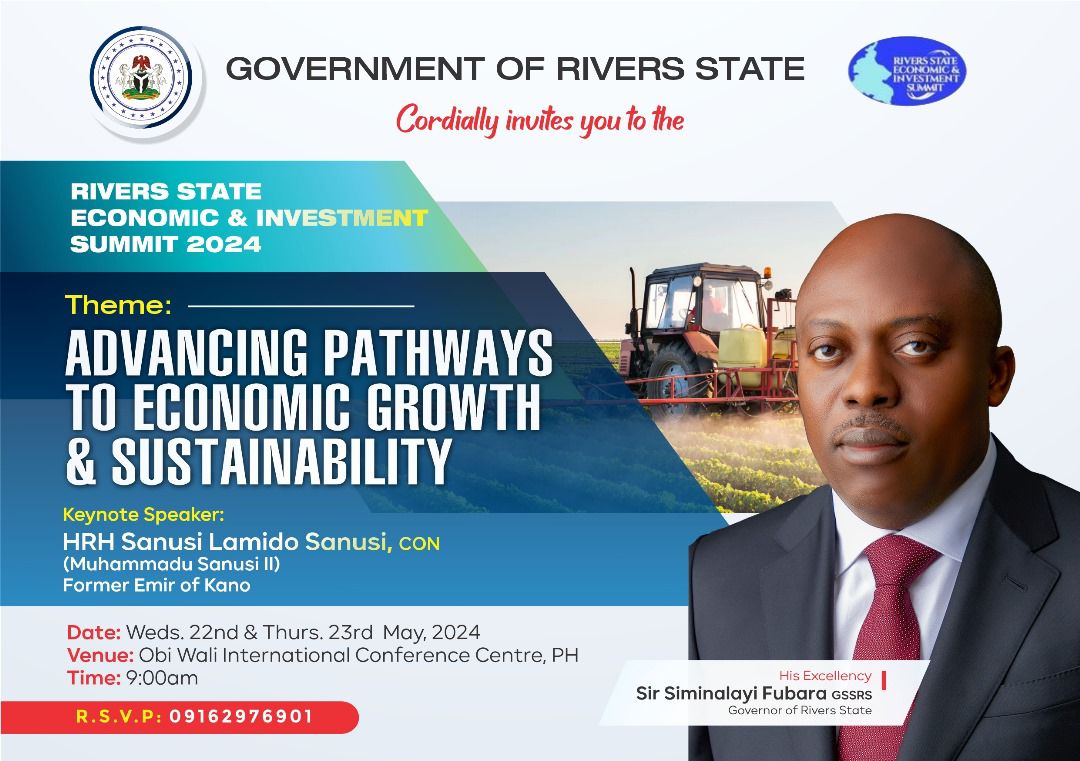
REMARKS OF HIS EXCELLENCY GOVERNOR SIMINALAYI FUBARA AT THE RIVERS STATE ECONOMIC AND INVESTMENT SUMMIT 2024 AT THE OBIWALI INTERNATIONAL CONFERENCE CENTRE 22ND MAY 2024
Protocols On behalf of the government and people of Rivers State, let me warmly welcome you all to the First Rivers State Investment Summit under our government, which is barely a year old.
I wish to especially welcome the chairman of today’s event, my dear older brother and friend, His Excellency Donald Duke, the former Governor of Cross Rivers State, and all other brother Governors who are here or represented for finding the time out of their busy schedules to be with us today out of their love for the progress of our State. I assure you that we do not take these kind and lovely gestures for granted.
Let me also welcome our Special Guest Speakers for today, Professors Magnus Kpakol and Kingsley Moghalu, as well as His Highness Sanusi Lamido Sanusi CON, the 14th Emir of Kano, who will be with us to headline tomorrow’s session of the summit as the Keynote Speaker. We deeply appreciate your presence and anticipated contributions to the development of our State through this summit.
Today’s event aims to advance investment opportunities in Rivers State. It provides an opportunity for us to hear from the experts, exchange ideas, raise questions and receive answers to the economic and investment challenges we face as a State.
Historically, Rivers State, especially Port Harcourt, was an established commercial centre in Nigeria. The Trans-Amadi Industrial Layout hosted several thriving commercial and industrial concerns that created income, jobs, and prosperity for our State and people.
Sadly, all that is now history as most of the industrial ventures in that estate have either closed shop or become moribund. The industrial estate is now characterised by abandoned factory buildings and warehouses.
We have since lost our rating as one of the industrialised States and competitiveness as a preferred destination for domestic and foreign direct investments resulting in the continuous posting of low economic growth, high unemployment rate, and slow development.
For decades, the Rivers State Government had continued to depend more on allocations from the federation account to fund its expenditures because tax revenues had remained low due to low investments and economic growth.
For us, building a resilient, robust, and diversified economy holds the key to sustainable peace, security and progress of our State and the spiritual, social, and physical well-being of our people.
We therefore commit to the re-industrialisation of Rivers State in partnership with the informal and organised private sectors through necessary policy, legal, and other support measures, and systems.
This was why we approved the Rivers State Economic and Investment Summit 2024 as the first of several measures to unveil the economic potential of the State to both local and foreign investors and markets.
Against this background, I feel very optimistic that Rivers State will emerge from this summit and position itself as a premier investment destination, offering boundless economic opportunities for domestic and global investors.
The reasons for this optimism are clear and realistic.
As a State, Rivers State is blessed with enormous human and natural resources, including oil and gas, fertile soil, solid minerals, and an extensive coastline with great water bodies.
The State is the centre-point of the oil and gas industry in West Africa. We account for over 40% of crude oil production onshore in the country and 100% of liquefied gas that the country exports.
The State also is the second largest economy in Nigeria, and with a nominal GDP of over $28.4bn, the State’s economy ranks in the top 25 economies in Africa comparable to countries like Botswana, Rwanda, and Gabon.
The State has a relatively robust infrastructure, including good roads, two seaports, an international airport, and a free trade zone, and with a population of over seven million indigenously diverse, educated, highly hospitable people, and a business-friendly environment, Rivers State stands at the centre of diverse economic opportunities.
Your Excellencies, Distinguished Guests, Rivers State provides several investment opportunities across diverse sectors of our economy, including oil and gas, agriculture and agro-processing, manufacturing, hospitality and tourism, education, ICT, and healthcare, infrastructure development, glass products, and garments production, and power generation and transmission, to mention a few.
With over 40% of fertile cultivable landmass, Rivers State has the potential to make a significant contribution to national food security with commercial investments in mechanised agriculture and the agro-processing industrial value chains.
Several state-owned but moribund companies, farmlands, and business infrastructure, including oil palm estates, rubber plantations, poultry, and fish farms are available for interested private investors to take over and revitalize. Additionally, Rivers State presents lucrative opportunities for the commercial production of highly valued cash crops for the export market.
Given these advantages and many other attractive opportunities, the economy of Rivers State has great potential for serious investors to tap into, exploit and be rewarded with huge profits and lucrative returns on investments.
Since assuming office, we have prioritised peace and security and focused on growing our economy through partnerships and collaborations in line with our belief that it is the private sector, not the State government, that grows the economy, creates jobs, and guarantees wealth and prosperity for our people.
Our commitment is to make Rivers State the best place in the country to invest and do business by creating a vibrant, investor-friendly business environment, and improving the ease of doing business to boost investors’ interest and confidence in the State.
We have already implemented certain policy initiatives and reforms, including the prompt allocation and issuance of land titles and certificates of occupancy to prospective investors and a moratorium on State taxes and levies on new businesses.
We are also working on the harmonization of State and Local Government taxes to eliminate double taxation and the imposition of multiple levies on investors.
Two weeks ago, we launched the 4 billion naira matching fund loan scheme with the Bank of Industry Limited for small, micro, and medium-scale businesses to drive financial inclusion and enhance the growth and development of support these businesses to grow our economy, create jobs and wealth for our people.
Furthermore, we have also approved the establishment of the Rivers State Investment Promotion Agency to provide one-stop-shop investment services and facilitation to investors in the State.
In the first year of our administration, we received an appreciable number of expressions of interest from local and foreign investors to invest in diverse sectors of our economy, including agriculture, real estate, power generation, and manufacturing.
We have signed a development agreement with TAF Nigeria Limited for the construction of 20,000 mixed houses in the Greater Port Harcourt City. We signed another development with Gosh Nigeria Limited for the construction of an international spare parts market. The State government provided hundreds of land as its equity and work has since started at both sites.
Apache Aluminium LLC of America has started the acquisition of land to establish a multi-billion-naira aluminium rolling mill (plant) in the Ogoni axis of Rivers.
We have opened discussions with Imagine Adama Agricultural and Technology of Israel to support the State in developing our huge agricultural potential, including reviving abandoned agricultural projects and infrastructures such as the Rivers Songhai Farm, the School-to-land farms, fish farms, feed mills, oil palm estates and poultry farms across the State. We have earmarked about 10 million USD for this project this fiscal year.
Last week, the State Executive Council approved the proposal by Rainbow Heritage Group to build the New Port City in the State on about 1000 hectares of land in collaboration with the Greater Port Harcourt City Authority.
We have also concluded arrangements for the signing of a Memorandum of Understanding with Planet One Holding Limited of Dubai for a 10,000,000 USD Mangrove Forests Conservation and Carbon Capture Project under the Private Public Partnership arrangement.
By and large, we are the economic heartbeat of the Niger Delta region and the South-East and our focus at this time is to grow our economy to greater heights so that we can derive more tax revenues to deliver quality social services to our people.
Our mantra is “Rivers First.” Our covenant and commitment are to serve our people to the best of our ability with compassion, honesty, and responsibility.
I assure you all that our intentions are right; our commitment is unwavering, and with the collaboration and support of all, we will collectively harness the economic potential of Rivers State to achieve considerably high and sustainable economic growth and prosperity in the coming decade and build a brighter future for our children and grandchildren.
As the saying goes, and I quote: “When there is light, there is hope. When there is light, there is strength. When you can see into the future, you can muster up enough strength to hold on today.”
Therefore, as we embark on this collective journey to economic prosperity, I call on all to join us to invest in the social and economic greatness of our State and secure the future for us and the next generations.
We are happy with the quality of attendance at this summit and confident that, in the end, it will galvanize more investment deals in the State.
Finally, I express my warmest wishes on behalf of the government and people of Rivers State, to the Consultants, Speakers, Panellists, and all participants and organizers for a fruitful and productive summit.
While wishing you a pleasant stay in Rivers State, I wish to assure you that we will reach out to all stakeholders to materialise the outcomes and recommendations of this summit.
On this note, I am pleased to declare the Rivers State Economic and Investment Summit 2024, open, and please, take note that Rivers State is open to business.
This statement, authored by African Civil Society Organizations, is intended for the attention of organizers and participants of the IEA Clean Cooking in Africa Summit, scheduled to take place on Tuesday, May 14th, 2024, in Paris, France. We present this statement with a profound sense of duty and responsibility towards the future of the African continent. As we stand on the brink of transformative change, it is crucial that our voices, representing a diverse mosaic of cultures, communities, and interests, are heard.
To initiate a meaningful dialogue ahead, during and after the summit, we urge you to:
Ensure and guarantee inclusion of community and CSO voices in the global clean cooking discourse. The IEA has indicated that the Summit will bring together over 800 stakeholders from governments, private sector, development partners, international organizations, philanthropies and civil society. From the participants list published by the IEA, it is clear that there was hardly any participation of CSOs from Africa, yet the agenda of the forum was to chart a way forward on accelerating progress of clean cooking in Africa. According to the UN SDG7 Tracking report-2021, four out of ten people without access to clean cooking live in Africa and most end-users rely heavily on biomass fuels for their cooking. African CSOs work directly with communities to address the challenges they face. Civil society groups play a key role in policy development on clean cooking, creating awareness on clean cooking technologies, demystifying cultural beliefs and practices that hinder clean cooking transitions, and building trust in the uptake of new technologies and approaches. The involvement of African partners should therefore be as inclusive and transparent as possible. And it must be done in a way that promotes equality and meaningful dialogue to ensure that the genuine needs and interests of Africans are reflected in any collective outcomes.
Increase financial and technological flow for clean cooking solutions by and for Africa. There is an urgent need to provide affordable access to cleaner and modern cooking solutions swiftly. At COP28, the IEA declared that Africa needed an annual investment of USD 4 billion to achieve universal access to clean cooking on the continent by 2030. Therefore, we demand increased public and private investments in clean cooking. Additional public funds should be directed towards de-risking markets and providing subsidies to address energy poverty in Africa. These finances should also be channeled to the end users, who shoulder the burden of assessing and transitioning to cleaner and safer cooking technologies.
Acknowledge the role of clean energy in fast-tracking clean cooking progress and Africa’s energy sovereignty. Africa possesses abundant untapped clean energy resources such as wind and solar that can be harnessed to accelerate the adoption of clean cooking solutions. Several multilateral development banks and private financial institutions persist in advocating for LPG as part of the transition to clean cooking. Research has shown that while LPG initially offered short-term benefits in Africa, its long-term efficacy in rural areas has fallen short of expectations. Our position is very clear, more investments need to be directed towards solar, wind and other clean forms of energy, including decentralized renewable energy systems. Bridging the energy gap is the best approach to achieving clean cooking targets by 2030.
Acknowledge and appreciate that access to clean forms of cooking as an important part of Africa’s development, energy and manufacturing plan. Solving the cooking challenge is not a charitable endeavour by donors, but a national and continental responsibility that calls for policy prioritization in each country and collaboration across the continent.
Appreciate that addressing the cooking challenge must be driven by social and public responsibility, not markets. Public grants and concessional finance play a catalytic role in addition to and scaling up of private sector investments. Private capital can only play a role under regulated conditions.
Desist from proffering false solutions that will prolong the crisis. Carbon credits must play no role in financing clean cooking. Carbon markets are a distraction to the mission of meeting basic needs guaranteed almost everywhere on the planet.
Advance a holistic approach to clean cooking. Access and use of (clean and affordable) energy should go beyond cooking. Every African household deserves to have energy for use in farming and food storage. Every African household deserves to own a fridge as nearly everyone in the developed world does. #PowerShiftAfrica #ClimateActionNetwork
DAILOGUE ON ENERGY TRANSITION PLAN (ETP) 22ND APRIL 2024 HELD AT ALGATE HOTEL GRA, PORT HARCOURT, NIGERIA.
The dialogue was moderated by Smith Nwokocha (Coordinator, Quest For Growth and Development Foundation).
In a remark, Friday Nbani of Lekeh Foundation, said the Nigeria Energy Transition Plan document was launched in 2021 at Glasgow COP26 and Nigeria endorsed the document and by 2060 Nigeria will phase out fossil fuels to Renewable Energy. The implication of the document in the Niger Delta people and how it is in line with NDC in achieving net-zero 2060. Nigeria is taking step by step to achieve or move away from dirty energy to clean energy.
Dr. Gberemene Kpae, a Lecturer at the University of Port Harcourt, did a presentation on the “Overview of the Nigeria Energy Transition Plan”. He looked at the introduction, objectives of the Energy Transition plan, and how realistic the policies will be. What informed the Nigerian Government on taking such action? Every country will go back home and design how to phase out fossil fuels. Nigerian Former Vice President Yemi Osinbajo oversaw the Energy Transition Plan for Nigeria, and he emphasized that, it’s the Nigerian Government’s Commitment to reducing greenhouse gas emission. The following ways according to Dr. G. Kpae are how to realize Nigeria’s Energy Transition Plan: 1) ETP shall identify and support low-carbon energy works for low-income Nigerians particularly in those rural and semi-urban centres. 2) Innovation in natural gas infrastructure development. 3) Modernize Biomass Utilization. 4) Improve Energy Efficiency in Small and Medium Businesses (SMEs). 5) Harmonize Climate Change Policies. He went further to highlight some of the Challenges of Implementing the Nigerian National Energy Transition Plan, which includes (a) Financing (b) Policy and regulation (c) Human Capital (d) Public Awareness and Acceptance (e) Lack of Purchasing Power. In conclusion, he re-emphasized that, Climate Change is something we are all experiencing, it is paramount to phase out fossil fuels and the Government has been able to come out with a policy that enables this to happen, the Nigeria Energy Transition Plan.
The Facilitator, Dr Grace Alawa of Rivers State University, Port Harcourt, expatiated on the “Implications of Nigeria Energy Transition Plan in the Niger Delta”. She said the ETP came out in 2022 and before it came out, we already had the NDC that addresses issues on Climate Change. This is an Academic Session, and she emphasized participants should have a copy of the Petroleum Industry Act (PIA). She said, the Niger Deltans are the ones on the front burner of Fossil fuel extraction and feel the impact the most. In her words, “to ensure that the energy transition plan aligns with the NDC”, each of us are stakeholder in achieving reduced emissions. She highlighted the following as the implications of ETP in the Niger Delta: (a) Our livelihood is tied to the petrol/oil in our lands, yet the common people are suffering and poor. (b) Moving to Renewable Energy sources, can the average person achieve it? Niger Delta is so blessed with natural resources. Oil has been drilled since the 50s, how many persons have benefited from it? The impact on the livelihood and jobs of the Niger Deltans is clear. What is the fate of the common persons in the Niger Delta? Potential Implications: are 1). Joblessness in the region 2) More concerns on the environment. 3) Energy Access/Affordability. 4) Community Participation/Involvement. Recommendation: Conducting Social and Thorough Impact Assessment. Also, Engage in Inclusive Community Development.
The outcome of the Interactive Session moderated by Stella Amanie of Society For Women and Youth Affairs is as follows: States should domesticate the NDCs and ETP as well. Countries like Nigeria that depends on petrol, it might be difficult for the political class to allow the actualization of the ETP. The ETP should include manpower skills and support. In recent times, there is a transition to Artificial intelligence (A.I) and the future is unpredictable, a project timeline should be brought forth. Also, Accountability of funding/funds received should be a priority. The Nigerian government can also start by ensuring that emission is reduced to at least 40%, it will be a good start. Harmonization of policies (Government Policies) is so essential around the Energy Transition plan because there are too many policies, and these policies can be put together on a single document as a pathway to achieving the ETP. Let’s Advocate that the Federal government should domesticate the ETP to States that know the roles of the Communities and every actor will key in. An important action to take, is for CSOs to possibly create an ETP Initiative or Forum, do a lot of Advocacy around the ETP Initiative and begin to engage the Government at different levels, the MDAs and Energy Sector as well. The ETP document is actualize, though the ETP is in an Exclusive List of the Federal Government and the Academics need to be engaged in this document. There is a need for Regional Conference in the Niger Delta, where we have in attendance, the organized Private Sector (because they will invest in the Energy Sector), the Academia (They will do the research) and the Civil Societies (They will enable the Advocacy part) and the Government as well, because they will enact the policies. We need to have an expanded focus. Do more stakeholder engagement, for more aggressive awareness of the Energy Transition Plan. The ETP plan should be segmented from short-term to medium-term and long-term, and this segmentation should have targets too. Government willingness in commitment to implement a deadline for Gas flaring, for instance, has been moved severally and the IOCs find it easy to default and pay for the penalties because they are not heavy. Finally, advocating for strong legislation.
The Organizing Partners are Global Initiative For Food Security and Ecosystem Preservation (GIFSEP), Vote4Climate, Lekeh Foundation, Society For Women and Youth Affairs and Quest For Growth and Development Foundation.
Egelege Orominike Community Dump-site Port Harcourt
By Smith Nwokocha
EARTH DAY CELEBRATION IN PORT HARCOURT, NIGERIA.
On the 22nd of April 2024, which is globally marked as Earth Day. An African Climate Reality Leader (Smith Nwokocha with some passionate Volunteers) embarked on a community-based intervention project (Bag The Waste Campaign) which involved a Clean Up exercise, donation of Waste Management Materials like Waste Bins, Waste Bags, Shovels, Brooms, Cleaning Mobs, Wreck, wheelbarrows, and other equipment that will enable the Parks and Dump-Site Management and Users maintain a clean environment. It was possible with support from the African Climate Reality project.
Sensitizing the Managing Director of Rivers Joy Travels and Tour Ltd (Rivers Transportation Company Park).
Smith started by sensitizing the Park Management of RiversJoy Travel and Tours Ltd, Drivers, Passengers and Park Users to clean up the environment all the time and bag their waste when done cleaning. Community members present were advised to stop Indiscriminate dumping of refuse, it causes blockage of the gutters, drainage system and the entire environment which will lead to Flooding and other unhealthy diseases/sicknesses. The Managing Director (Dr. Peter B. L. Borlo, FCILT, MNIM, JP), appreciates the African Climate Reality Project for supporting such an amazing initiative, that has made their drivers today become conscious of bagging their waste and of course the park users too. They are grateful and will maintain a culture of cleanliness.
Furthermore, the African Climate Reality Leader moved to Egelege Dumpsite at Orominike Community in Port Harcourt with some volunteers, where he sensitized the Dump-site Management and joined in cleaning up the dumps site. In the process of cleaning up the dump site, he spent some hours separating plastics from other specks of dirt in line with the global theme: Plastic vs planet.
Antimicrobials have been essential in reducing the burden of infectious disease in humans, animals and plants for decades. However, their effectiveness is now in jeopardy because several antibiotic, antiviral, antiparasitic and antifungal treatments no longer work because of antimicrobial resistance or AMR.
The World Health Organization considers AMR in humans and animals to be one of the top ten threats to global health. Estimates suggest that by 2050 up to 10 million deaths could occur annually affecting economies and shifting more people into poverty. If not dealt with, AMR could also significantly affect agricultural production, again affecting economies and food security, and low-income and lower middle-income countries will bear most of the burden.
Global attention to AMR has mainly focused on human health and agriculture sectors, but there is growing evidence that the environment plays a key role in the development, transmission and spread of AMR. The environmental dimensions of AMR are complex and characterized by dynamic interactions, cyclic interrelationships, complexities,
and multiple casualties and dynamics in multi-dimensional media that impact global planetary health.
AMR can occur naturally or can be acquired. Increased use and misuse of antimicrobials and other microbial stressors, such as pollution, create favourable conditions for microorganisms to develop resistance both in humans and the environment from sources such as sewage. Bacteria in water, soil and air for example can acquire resistance following contact with resistant microorganisms.
The environmental dimensions of AMR include pollution from hospital and community wastewater, effluent from pharmaceutical production, run-off originating from plant and animal agriculture and other forms of waste and releases. These matrices
may contain not only resistant microorganisms, but also antimicrobials, various pharmaceuticals, microplastics, metals and other chemicals, which all increase the risk of AMR in the environment. Polluted waterways, particularly those that have been polluted for some time, are likely to harbour microorganisms that increase AMR development and distribution in the environment. With increasing pollution and lack of management of sources of pollution, combined with AMR in clinical and hospital settings and agriculture, risks are increasing.
The key economic-sectors contributing to the environmental dimensions of AMR can be broadly classified as: pharmaceutical and other chemical manufacturing and uses including a range of different chemicals, such as antibiotics, antivirals and fungicides as well as disinfectants; agriculture including animal production, aquaculture, food crops or those providing inputs such as feed, textiles, ornamental plants, biofuels and other agricultural commodities; healthcare delivery in hospitals, medical facilities, community healthcare facilities and in pharmacies where a broad range of chemicals and disinfectants may be used.
While the relationship between environmental pollution and AMR and the reservoir of resistance genes in the environment has been established, the significance and its contribution to AMR globally is still unclear. Even so, there is enough knowledge to implement measures to reduce the factors that influence AMR from an environmental perspective; this will also address the triple planetary crisis by addressing sources, sinks and waste.
Using the ‘One Health’ approach, which recognises that the health of people, animals, plants and the environment are closely linked and interdependent, can successfully address AMR. Some countries have already adopted this approach and have included environmental-related aspects into their National Action Plans on AMR. Agriculture, health and environmental agencies have in place many policy and regulatory frameworks and controls addressing some of the drivers and factors with an impact on environmental dimensions of AMR. Voluntary industry initiatives have established a common framework for managing discharge of antimicrobial compounds and apply it across manufacturing and supply chains among their members. International organizations and bodies are taking decisions and have initiatives such as the joint efforts of the Quadripartite Alliance (FAO, UNEP, WHO and WOAH) for strong and coordinated action.
Yet still more needs to be done.
This report calls for priority action to address key pollution sources from poor sanitation, sewage; community and municipal wastes; healthcare delivery; pharmaceutical manufacturing; intensive crop, and terrestrial and aquatic animal production sectors. There are many co-benefits of preventing and managing pollution in these sources to address biological wastes that contain resistant microorganisms that spread AMR, and chemical wastes that select for AMR. To prevent and reduce such pollutants it is crucial to:
create robust and coherent national level governance, planning, regulatory and legal frameworks, as well as establish coordination and collaboration
mechanisms
increase global efforts to improve integrated water management and promote water, sanitation and hygiene to limit the development and spread of AMR in the environment as well as to reduce infections and need for antimicrobials
increase integration of environmental considerations into National Action Plans on AMR, and AMR into environmental-related plans such as national chemical
pollution and waste management programmes, national biodiversity and
climate change planning
establish international standards for what are good microbiological indicators of AMR from environmental samples, which can be used to guide risk reduction
decisions and create effective incentives to follow such guidance
explore options to redirect investments, to establish new and innovative financial incentives and schemes, and to make the investment case to
guarantee sustainable funding, including the allocation of sufficient domestic resources for tackling AMR.
Prevention is at the core of the action and environment is a key part of the solution. Implementing comprehensive and coordinated strengthening of environmental action in the ‘One Health’ response to AMR will not only help reduce the risk and burden of AMR on societies but will also help address the triple planetary crisis.
A call to action:
Limiting the emergence and spread of resistant pathogens is critical to preserving the world’s ability to treat diseases in humans, animals and plants, reduce food safety and security risks, protect the environment and maintain progress towards the SDGs (WHO
et al. 2021). The global response to AMR rests on collaboration between sectors that have traditionally fallen within separate policy spheres.
The environment has received limited attention in tackling AMR, but evidence shows that the environment plays a key role in the development, transmission and spread of AMR. Now, while its
contribution and significance are determined, further and more coordinated action, with a focus on prevention, needs to be taken to limit the role of the environment in mediating, driving and causing AMR.
This report has shown that the environmental dimensions of AMR are multifaceted, requiring action at local, national, regional and global levels and with a broad array of stakeholders. Country implementation is particularly at the heart of a successful response to AMR, as it is in countries that the work of addressing the many challenges of AMR ultimately takes place. What is needed is a robust legal and regulatory framework that prevents the risk of AMR addressing the drivers and factors with an impact on environmental dimensions of AMR. This includes regulating the use of antimicrobials on farms, including aquaculture; limiting the discharge of effluent from pharmaceutical and other chemical industries,
and hospital waste; improving integrated water management; promoting water, sanitation and hygiene; and waste management.
While countries might have different processes for developing and managing an effective national governance mechanism for AMR, the need for a robust multisectoral coordination system has been highlighted across multiple fora as key for tackling AMR in a sustainable manner. Thus, countries need to integrate such environmental considerations into AMR National Action Plans, and AMR into
environmental-related plans such as national chemical pollution and waste management programmes, national biodiversity and climate change planning.
Another priority area for urgent action remains to ensure continued political engagement and support in countries, including national budget allocations and scaling up technical capacity across all sectors to accelerate the implementation of the NAP on AMR. Countries need to explore innovative financial incentives and schemes, and to make the investment case to guarantee sustainable funding.
Environmental monitoring and surveillance and further research prioritization are also pivotal to provide more data and evidence and better
understand the complex dynamics of AMR. This will lead to improved science-policy interfaces to ensure informed decision-making and prioritise interventions.
Therefore, strengthening national, regional and global surveillance systems through improved data management, private sector engagement,
implementation of data-driven practices and reporting is critical.
Further engagement and commitment are needed from industry actors from the three economic sectors and their value chains that are key drivers of AMR development and spread in the environment
i.e. pharmaceuticals and other chemicals, agriculture and food, and healthcare. This commitment should include further steps to ensure more transparency and corporate responsibility regarding their contribution to the risk of AMR.
Globally, there is a need to establish international standards for what are good microbiological indicators of AMR from environmental samples, which can be used to guide risk reduction decisions and create effective incentives to follow such guidance.
National and global AMR-related planning and action, and the critical role and contribution of environmental authorities, experts and practitioners need to be strengthened. Strategies and plans need to utilise the ‘One Health’ approach while addressing financial/business, climate and cultural contexts.
Regulatory, economic and in some instances cultural barriers will need to be overcome. Gender equality and rights-based approaches need to be adopted
in order to make progress towards environmental sustainability. These issues need to be addressed and given prominence in deliberations on the topic.
The Quadripartite organizations need to continue leveraging their respective organizations’ resources and strengths to jointly support countries in scaling up national responses to AMR through a ‘One Health’ approach.
Solutions exist, and many of them have been captured in this report. They range from specific management actions to promoting sustainable production and consumption. A clear vision, ambitious targets and road maps supported by political prioritization of
a ‘One Health’ response to AMR and international enabling action are needed to leverage the momentum.
Summary
The need for a robust multisectoral coordination system by all stakeholders, especially environment ministries and agencies, has been highlighted across multiple fora as key for tackling AMR in a sustainable manner.
Strengthening national actions require boosting governance, planning and regulatory frameworks, through integrating AMR in national development planning and budgeting, and into environmental- related plans and processes. Likewise, incorporating environmental considerations
into NAPs on AMR and considering a systems approach for a possible national action framework.
Priority actions required to improve reporting, surveillance and monitoring systems include developing and integrating environmental monitoring systems, strengthening systems for transparent and swift collection and reporting, monitoring and documenting releases of antimicrobials, resistant microorganisms and their genetic material to the environment, and strengthening surveillance for pandemic preparedness.
Additional research and further work are needed such as clarifying the role of the environment as affected by human activity (e.g. pollution) on the evolution of AMR, understanding the relative importance of each pollution source, developing and enforcing standards to reduce antimicrobial discharges/emissions, and identifying cost-effective technological, social, economic and behavioural interventions.
Prioritizing financing, including domestic resources, innovation and capacity development to support environmental action are crucial elements for strengthening the environmental action to tackle AMR.
Host: Dr. Dickson A.O. Akoh (National Commandant-Peace Corps of Nigeria).
Under The Distinguished Chairmanship of RT. Hon. Zaphaniah Bitrus Jisalo (Honourable Minister, Federal Ministry of Special Duties and Inter-Government Affairs).
Special Guest of Honour Dr. Jamila Bio Ibrahim (Honourable Minister, Ministry of Youth Development).
This event is the Peace Corps of Nigeria Nation-wide Retreat, held from the 4th – 5th April 2024. In Rivers State, under the Leadership of the Commandant Dr. Michael Obiora, it was such an impactful ceremony and lecture, which held at Community Secondary School, Okoro nu-odo, Rumuokoro/Rumuoagholu Town, Obio/Akpor Local Government Area of Rivers State.
The Commandant, Peace Corps of Nigeria, Rivers State Command (Dr. Michael Obiora)
On the 4th of April, Dignitaries including the special guest of honour at the Rivers State Command Centre of the Nationwide Retreat was the Honorable Commissioner for Information and Communication, who was ably represented by the Director Administration of the Ministry (Dr. Sam Ugo Onyeka).
In his address to the Corps, he appreciates the Management for organizing a training retreat for it’s principal officers across the nation, as he extolled the virtues of staff training. He also admonished the officers to use this training opportunity to add positively to themselves, Rivers State and the nation at large.
On the 5th of April, Dignitaries were in attendance, which includes Peace Corps of Nigeria Commandant and Officers in Riveres State Command and Reps from Abuja Command, Amb. Smith Nwokocha of Quest For Growth and Development Foundation, Mrs. Mercy Nwokocha of Institute of Human Virology of Nigeria (IHVN) and The Manager of Chilkield Security and his team were also guests at the three days training.
The virtual lecture was live, with focus on “Strategic and Essential Service” and some Administrative Principles, which sited the practicability of Henri Fayol 14 Principles of Management; highlighting them are as follows: 1. Division of Work 2. Authority 3. Discipline 4. Unity of Command 5. Unity of Direction 6. Subordination of Individual interest to general interest 7. Remuneration 8. Centralization 9. Scalar Chain 10. Order 11. Equity 12. Stability of tenure 13. Initiative 14. Espirit de Corps. Followed by James D. Mooney’s Administrative Management, which are: 1. Coordination 2. Hierarchy 3. Functional Differentiation and Lastly, Luther Gulick and the POSDCORB Theory that involves; 1. Planning 2. Organizing 3. Staffing 4. Directing 5. Coordinating 6. Reporting 7. Budgeting.
The above led to the Essential Skills for Administrative Management such as 1. Technical skills 2. Human skills 3. Conceptual skills. The facilitator emphasized that as a Leader, you must stay in touch with the trends of time (technology) and be versatile. He went ahead to inspire the officers that, as Leaders they must have the ability to communicate and communicate effectively and possibly avoid avoidable risks. He further, mentioned the benefits of Implementing Strong Administrative Management Strategy. In conclusion, he said, a good Administrative Strategies will ensure optimal performance among team members, while lack of good communication could lead to wrong decision making. Therefore, no single strategy makes a complete strategy, except all. The lecture ended with a Q & A session.
Back to Rivers State, the Commandant appreciates all the Officers, Reps from Abuja and Guests for joining the Peace Corp of Nigeria on this Retreat and Leadership training for Principals Officer, which include Leaders holding sensitive positions in different units of the command and the training will reshape and improve operations of the Officers.
Group pictures with the Commandant, Some Principals Officers and Guests
Climate Reality Leader Smith Nwokocha championed a “Bag Your Waste Campaign” with the theme: Clean Up Africa with support from African Climate Reality Project. On the 26th of March 2024, exactly 10:00am WAT.
He sensitized the students and staff of Community Secondary School, Oroworukwo and K.C. International Academy in Port Harcourt, Nigeria on how to use this exercise of Clean Up and Bagging of Waste as a tool for Advocacy to hold relevant Authorities and Stakeholders, especially Plastic Polluters accountable for better Waste Management practices and possibly lobby for the policies to reduce the Manufacturing and sale of single-use plastic items.
Furthermore, Smith alongside the students embark on real-time sanitation exercise by cleaning up the dump site in the school premises and over 100 plastic bags were filled with plastic waste items collected during the clean up exercise.
Coke Plastic Bottles 200
Pepsi Plastic Bottles 200
La sien Water Plastic Bottles 250
CWAY Water Plastic Bottles 260
Unknown Brand Bottles 90
Papers/shattered Books 160
Cans 210
Leaves 180
Plastic Sachet 500
Plastic cups 50
Plastic straws 100
Plastic Food Wrappers 250
Sanitary pads 80
Toiletries 150
Above is the statistics of plastic and waste discovered. Afterward, students were inaugurated as Eco-Champions/Ambassadors in the school, to sustain the exercise all through the school terms/sessions. In taking action to improve waste management practices, the students will keep raising awareness and organize community/school clean up exercise regularly. Smith also, taught the students and staff how providing solutions to plastic pollution by adopting the 7R’s of Sustainability, which include: a) Reduce b) Recycle c) Reuse d) Reduce e) Rethink f) Repair and g) Rally.
The Clean Up Exercise
Climate Reality Leader Smith Nwokocha with support from African Climate Reality Project donated some useful Materials and Cleaning Tools, including Trash bags, Shovels, Reks, Handmade and Mechanized Brooms, Cleaning Mob and buckets, Large, medium and small sized Waste bin, packs of Nose masks and handgloves in numbers to the schools to maintain the culture of bagging their waste and cleaning up the environment. The Principal and Proprietress of the schools, students and staff expressed gratitude for such gesture.
In attendance, over 224 students from Community Secondary School, Oroworukwo attended the exercise, while 99 pupils attended from K.C. International Academy, all in Port Harcourt, Nigeria.
Grooming Pupils for Climate Action #BagYourWasteCampaign








 PHwakawaka